



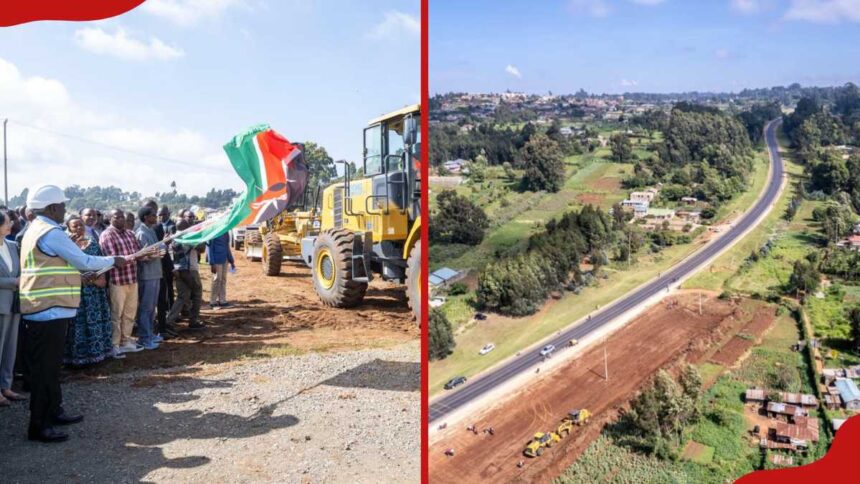
- Interior PS Raymond Omollo praised the Rironi-Mau Summit Highway upgrade as a transformative project that will ease travel, boost trade, and enhance safety along the busy Nairobi-Western Kenya corridor
- The 233km highway, long plagued by congestion, is being expanded with multi-lane sections, an elevated road in Nakuru, and improved access for heavy traffic
- Omollo emphasised that beyond convenience, the project is an investment in commerce and community, expected to deliver faster, safer, and more reliable journeys by 2027
Interior Principal Secretary Raymond Omollo has hailed the ongoing upgrade of the Rironi-Mau Summit Highway as a transformative project that will improve travel, trade, and safety for commuters heading to Western Kenya.

Source: Twitter
The highway, spanning 233 kilometres, has for years been a major bottleneck for drivers, with frequent traffic jams, slow movement on the escarpment, and congestion in Nakuru.
Omollo emphasised the importance of prioritising the people who rely on the corridor daily.

“We are committed to ensuring this highway serves the people who rely on it every day. Safer roads, reduced travel time, and smoother journeys are the key objectives,” he said.
How Rironi-Mau Summit Highway will be upgraded
The upgrade includes widening the Rironi-Naivasha section to four lanes, while the Naivasha-Nakuru stretch will expand to six lanes to accommodate trucks, buses, and heavy commuter traffic.
Nakuru City will feature an elevated road to ease traffic flow in the city centre.
Beyond Nakuru, the highway will continue as a four-lane road to Mau Summit, significantly improving access to Western Kenya for traders, students, and families.
According to Omollo, the project is more than a road construction exercise; it is an investment in commerce and community.
“Beyond convenience, this road is an investment in trade, agriculture, and access to essential services. It ensures people, produce, and goods move safely and efficiently,” he said.
With the highway in place, market vendors can deliver produce faster, farmers can transport crops reliably, and families will spend less time on the road.
The project is being executed by China Town and Bridge Corporation and Shandong Hi-Speed Road and Bridge International, working on different sections simultaneously.

Once complete, the highway will operate as a toll road, charging KSh 8 per kilometre, while alternative routes will remain available for drivers who prefer them.

Source: Facebook
The government is also widening the Westlands-Rironi road to six lanes, with 82% of the work completed, ensuring smoother access from Nairobi.
Omollo stressed that the upgraded highway will support national economic growth by facilitating trade, improving supply chains, and creating safer conditions for long-distance drivers and commuters alike.
By the end of 2027, he noted, travel along the Nairobi-Western Kenya corridor is expected to be faster, safer, and more predictable, benefiting travellers, traders, and local communities, and demonstrating Kenya’s commitment to modern, citizen-focused infrastructure development.
When will dualling of Nairobi-Nakuru Highway end?
Elsewhere, President William Ruto recently noted that the larger Nairobi-Nakuru Highway has long inconvenienced travellers heading to Western Kenya.
Ruto noted that the highway’s dualling, launched in November, was long overdue and would help ease congestion along the busy route.
He assured that, with construction in progress, traffic flow will improve by late next year, marking the last festive season with severe gridlock, even though full completion is expected in June 2027.

The works, initiated on November 28 after consultations with CCCC and executed by its subsidiary CRBC, will focus on expanding the most congested sections simultaneously.
Source: TUKO.co.ke