



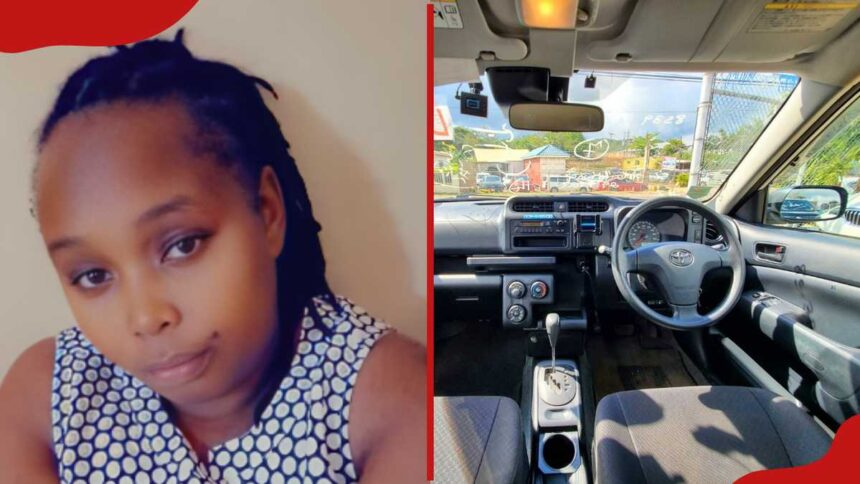
- In 2018, Virginia Wangui and her husband bought a car to grow their small family business, unaware it quietly carried a secret
- The truth emerged years later when officers from the Directorate of Criminal Investigations (DCI) arrested Wangui’s husband
- What had started as a venture geared towards growth destroyed the family and pushed their once-thriving business into ruins
Virginia Wangui never imagined that a vehicle bought in good faith to support her family business would, years later, cost her livelihood and her freedom.

Source: UGC
What began in 2018 as a hopeful step towards financial stability ended in arrests, court battles and the collapse of everything she and her husband had built.
Wangui told TUKO.co.ke that her husband travelled to Bomet in 2018 to buy a Toyota Probox to help run their business.
According to her, the car appeared legitimate: it had documents, a search was conducted, and nothing raised alarm.

However, there was a hitch, the seller had never transferred ownership after buying the vehicle himself, meaning the logbook still bore the name of the original owner.
The seller assured Wangui’s husband that he would complete the transfer later, explaining that neither of them had a TIMS account at the time.
Days turned into months, then years. The transfer was never done, but the family continued using the car until 2023, when they decided to sell it.
By then, the man who had sold them the vehicle had died, and attempts to reach the original owner proved futile as his phone was unreachable.
Their buyer, Wangui says, was unconcerned by the missing transfer documents and agreed to complete the process later.
He paid KSh 290,000, signed a sales agreement, and drove away with the car. Soon after, however, he began calling frequently, complaining that the vehicle was “troubling him a lot”.
Nearly nine months later, the call that changed everything came. The buyer informed them that the Probox had been impounded and was allegedly reported stolen in 2018, the same year Wangui’s husband had bought it.

Before the family could fully comprehend the situation, officers from the Directorate of Criminal Investigations (DCI) in Thika arrived and arrested Wangui’s husband.
Fearing he might lose his job, the family hurriedly raised bail money. After listening to his account, the DCI boss dismissed the case against him and ordered junior officers to pursue the man who had sold them the car.
But the ordeal was far from over. Two months later, Wangui received court summons. She had been sued by their buyer at the Small Claims Court for selling him a stolen vehicle.
Acknowledging the buyer’s loss, Wangui refunded part of the money, paying KSh 150,000. By then, she says, her business had collapsed, leaving her unable to raise the remaining balance.
Her inability to pay landed her in jail. Wangui was only released after paying the full amount owed, along with additional fines, money she says pushed her family further into ruin.
As for the car, its fate remains unclear. Wangui says police later told her that the original owner had collected it and chose not to press charges.

Today, Wangui is left counting the cost of a mistake she insists was never intentional. The gaps in vehicle ownership processes devastated her life, turning a tool for survival into a source of lasting pain.
Source: TUKO.co.ke