



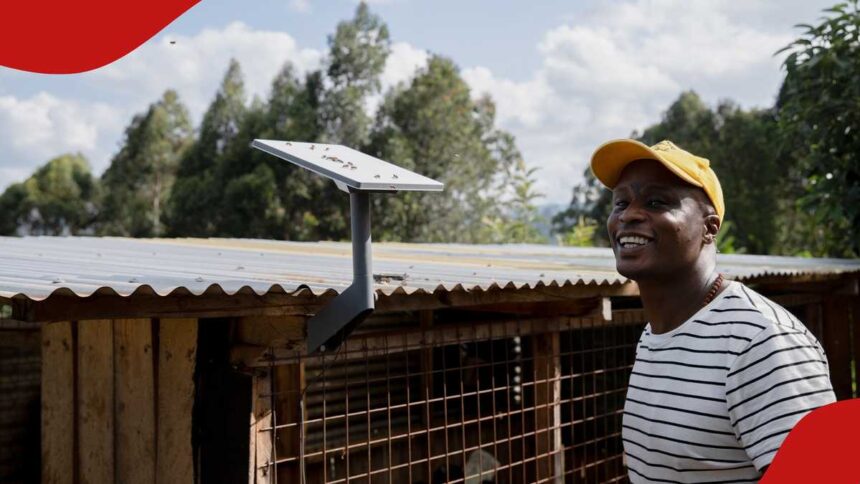
- American billionaire Elon Musk’s internet firm, Starlink, announced new payment plans for its mini kits in Kenya
- The compact kit now requires less money up front, but is paid for in larger instalments each month, making it affordable for consumers
- Starlink is ranked ninth among Internet Service Providers (ISPs) in the country, with a market share of 0.8%, behind Safaricom and other companies
TUKO.co.ke journalist Japhet Ruto has over eight years of experience in financial, business, and technology reporting, offering insights into Kenyan and global economic trends.
Starlink, the SpaceX-owned satellite internet service owned by American billionaire Elon Musk, has announced instalment payments for its mini kits in Kenya, lowering upfront costs for customers.


Source: Twitter
The firm aims to boost subscriber growth that has slowed over the past year.
How much will Starlink subscribers pay?
The new plan needs an upfront payment of KSh 6,750, followed by KSh 16,250 for activation costs and KSh 3,000 for shipment.
The remaining amount must be paid over a period of six months.
“Instalment payments are available for customers who prefer to pay for their Starlink mini kit over time (six months). Pay your first instalment at checkout and then pay off the remainder of your balance with six monthly instalment payments,” Starlink announced on its website.
The standard KSh 6,500 residential subscription charge has been increased by KSh 4,500 per month for the kit over six months.
The high upfront cost of Starlink’s equipment has been hampering subscriptions for the majority of customers.

Following the new payment plan, price-conscious consumers are likely to have more access to the kits, especially in underserved and rural areas, where paying up front costs have deterred users.
The compact kit, which costs KSh 27,000, now requires less money up front, but is paid for in larger instalments each month.

Source: Twitter
When was the Starlink mini kit introduced in Kenya?
In September 2024, a year after the company entered the local market, the Starlink kit was introduced in Kenya at KSh 49,900.
Within the first six months of entering Kenya in 2023, the company grew quickly and held a 0.5% market share.
The Communications Authority of Kenya reported that as of December 2025, there were 19,146 customers, up from 16,786 in September 2024, representing a market share of 0.8%.

What slowed Starlink’s market share?
However, due to capacity issues, the company stopped subscriptions in crowded cities like Nairobi and Mombasa in November 2024, which hindered expansion.
Active subscriptions dropped to 17,066 by March 2024 as a result of the freeze, which was in effect until June 2025.
The pause gave rivals a chance to increase their dominance in the local market.
The largest telecom companies in the nation, Safaricom and Airtel, moved to install 5G routers that cost less than KSh 3,000, aiming to reach the same rural customers that Starlink had.
The fixed internet market in Kenya is dominated by Safaricom (35.6%), followed by Jamii Telecom (20.6%), Wananchi Group (12.7%), Poa Internet (12.5%), Ahadi Wireless (7.5%), and Mawingu Networks (3.6%). Starlink is ranked ninth.
Source: TUKO.co.ke