



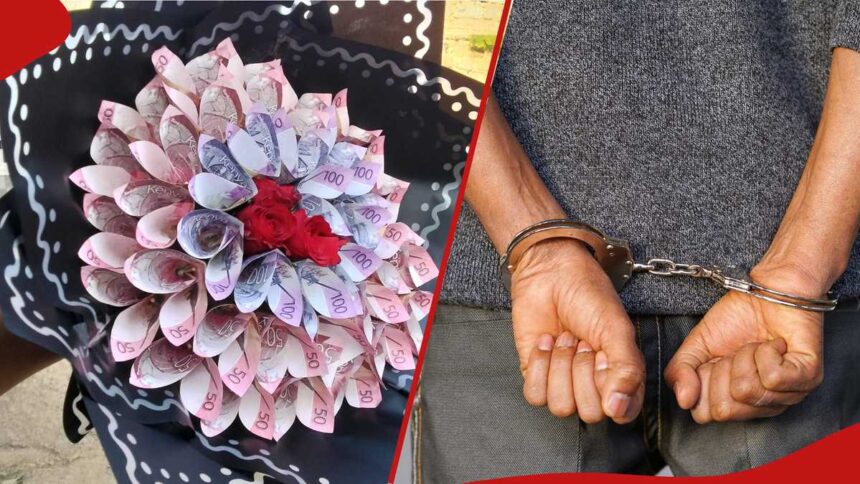
- The Central Bank of Kenya has issued a stern warning against a popular trend of folding, gluing, and stapling banknotes to create decorative cash bouquets and gifts
- The bank says the practice, often seen at weddings, birthday parties, and baby showers, damages currency, clogs vital financial machines, and is a criminal offence
- CBK urged citizens to adopt alternative, non-damaging methods for monetary gifts to preserve the integrity of the national currency
Elijah Ntongai is an experienced editor at TUKO.co.ke, with more than four years in financial, business, and technology research and reporting. His work provides valuable insights into Kenyan, African, and global trends.
The Central Bank of Kenya (CBK) has cracked down on the creative but costly trend of turning cash into ornamental gifts.

Source: UGC
The regulator declared that folding, stapling, or gluing banknotes for bouquets is illegal and economically damaging.
In a strong advisory, the regulator highlighted that the widespread practice of preparing “cash flower bouquets” and decorative displays compromises the quality of the Kenya Shilling, leading to its premature withdrawal from circulation at a significant cost to the public and the bank.

CBK emphasised that while giving cash as a gift is acceptable, any action that alters, defaces, or impairs a banknote violates the law and disrupts the entire cash-processing ecosystem.
Why is the CBK concerned about decorative cash bouquets?
The bank has observed a surge in celebratory arrangements where notes are meticulously folded, rolled, and fastened with adhesives, tape, staples, or pins to create elaborate gifts.
Notably, the regulator’s warning is seen as timely as the Valentine’s day nears.
CBK states that these materials cause physical damage to the currency, rendering the notes unfit for recirculation.
More critically, the residual glue, metal pins, and thickened paper layers jam and interfere with Automated Teller Machines (ATMs), cash counting machines, and high-speed sorting equipment used by banks.
This leads to frequent machine breakdowns, increased rejection of notes during processing, and ultimately, the need to replace damaged currency much earlier than its intended lifespan, a cost ultimately borne by the public.
What does the law say about damaging currency?
The CBK’s notice serves as a stark reminder that damaging money is not just inadvisable; it is a criminal act.

The bank specifically cited Section 367 of the Penal Code, which prohibits the defacement, mutilation, or impairment of any currency note issued by lawful authority.
“Any person who willfully defaces, mutilates, or in any way impairs any currency note… commits an offence under the Penal Code,” the notice stated, indicating that those crafting these bouquets could be liable for prosecution.
What is the CBK’s directive to the public?
The central bank has urged the public to immediately cease practices that compromise the structural integrity of banknotes.
While affirming that cash remains a perfectly acceptable gift, CBK insists it must be presented in a state that allows it to function freely as a medium of exchange, a unit of account, and a store of value.
The regulator advised Kenyans to “adopt alternative, non-damaging methods when presenting monetary gifts,” suggesting the use of envelopes, gift cards, or digital transfers instead.
The cost of constantly replacing mutilated notes strains public resources.
The notice is a form of public sensitisation, aiming to curb a socially accepted practice that many may not realise has legal and economic consequences.


Source: Facebook
How did Kenyans react to the CBK notice?
TUKO.co.ke further reported that the CBK notice sparked mixed reactions, highlighting gendered perspectives on cultural gift practices and compliance with financial regulations.
Men and single people welcomed the warning, seeing it as an excuse to avoid buying expensive bouquets or as a win over jealousy-inducing gifts.
Kenyan women expressed disappointment online after the CBK warned against making money bouquets, a popular and flashy Valentine’s Day gift trend.
Many lamented that the directive ruined their Valentine’s Day expectations, joking that the CBK should have issued the warning after the holiday.
The CBK emphasised that defacing or folding currency notes for bouquets is illegal, as it compromises the integrity of Kenyan money.
Source: TUKO.co.ke