





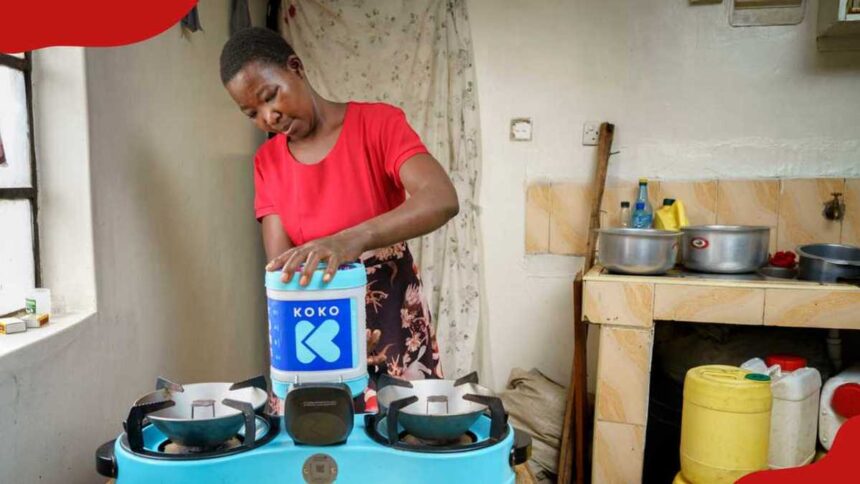
- A major dispute with the Kenyan government over the sale of carbon credits has led to the dramatic collapse of clean energy startup Koko Networks
- The firm, which had invested over $300 million (KSh 38 billion) and served 1.5 million homes, filed for administration on February 1 after failing to secure crucial export licenses
- Trade Cabinet Secretary Lee Kinyanjui said the government refused authorisation because Koko’s demand for carbon credits would have exhausted Kenya’s entire global quota, locking out all other companies and industries
Elijah Ntongai is an experienced editor at TUKO.co.ke, with more than four years in financial, business, and technology research and reporting. His work provides valuable insights into Kenyan, African, and global trends.
The Kenyan government’s refusal to grant Koko Networks licenses to sell carbon credits in lucrative international markets directly triggered the collapse of the World Bank-backed clean cooking startup.

Source: UGC
Trade Cabinet Secretary Lee Kinyanjui, speaking publicly for the first time on the issue, stated that approving Koko’s request would have allowed it to monopolise Kenya’s entire share of the UN-supervised carbon compliance market.

He said this would have left no room for other eligible firms in agriculture, manufacturing, and other sectors.
The company employed 700 people and operated 3,000 bioethanol refilling stations.
Koko filed for administration after its revenue model, which relied on selling high-value carbon credits to subsidise fuel for low-income households, collapsed without the government’s letters of authorization.
What was the dispute between Koko and the Kenyan government?
Koko Networks’ business model was built on a “carbon finance” premise.
This means they would sell clean cookstoves and bioethanol fuel at subsidised rates to low-income households, then calculate the carbon emissions avoided by displacing charcoal use, and sell those carbon credits internationally.
The profits from credit sales were meant to fund the subsidies and keep the company afloat.
Although the government signed an investment framework agreement in June 2024, it never issued the final “Letters of Authorisation” from the National Environment Management Authority (NEMA) required under Article 6 of the UN Paris Agreement to sell credits into the high-value “compliance market.”

“The business model did not align. It was not possible to allow everything they wanted to claim because it would mop up everything that Kenya would otherwise do,” CS Kinyanjui explained the impasse.
He added that authorising Koko’s requested volume would have damaged Kenya’s credibility and left no carbon credit quota for dozens of other companies.
Why were the carbon credit licenses critical for Koko?
The type of license determined the company’s survival.
Carbon credits in the voluntary market, where companies buy offsets for corporate social responsibility, fetch far lower prices, as little as $2.
However, in the the UN-supervised compliance market, where countries trade credits to meet emission targets, offer prices range around $20 per credit, about ten times higher.
Koko needed the high-value compliance market revenue to break even, but without the government’s authorisation, it was locked out of this crucial income stream, making its subsidised fuel business financially unsustainable.
The government also raised concerns about the “authenticity” of Koko’s carbon calculations and a general “lack of transparency” in its business model.
What is the potential financial fallout for Kenya?
The collapse could trigger a massive compensation claim against the Kenyan government.

In March 2025, the World Bank’s Multilateral Investment Guarantee Agency (MIGA) insured Koko’s investment with a $179.6 million (KSh 23.1 billion) political risk policy, the world’s first carbon-linked insurance.
This policy explicitly covers “government breach of contract.” Koko is expected to file a claim with MIGA, alleging the government’s refusal to issue the agreed-upon authorisations constituted a breach.
MIGA would then likely seek compensation from the Kenyan government, potentially leaving taxpayers with a KSh 23.1 billion liability.
CS Kinyanjui’s comments are seen as laying the groundwork for the government’s legal defense, arguing the refusal was justified to protect national interests and other sectors.

Source: Twitter
What happens next after the company’s collapse?
PricewaterhouseCoopers (PwC) announced that administrators Muniu Thoithi and George Weru took control of Koko Networks Limited and its Kenyan services arm on February 1, 2026.
Their task is to manage the company’s remaining assets, which include the vast network of fuel machines and intellectual property, and to handle claims from creditors.
The exit leaves 1.5 million households searching for alternative cooking solutions and casts a shadow over Kenya’s attractiveness for large-scale carbon finance projects.

CS Kinyanjui suggested the company needed a “rethink” and to “reconfigure its business model,” indicating the government was unwilling to bend its rules on national carbon quota management.
Source: TUKO.co.ke