



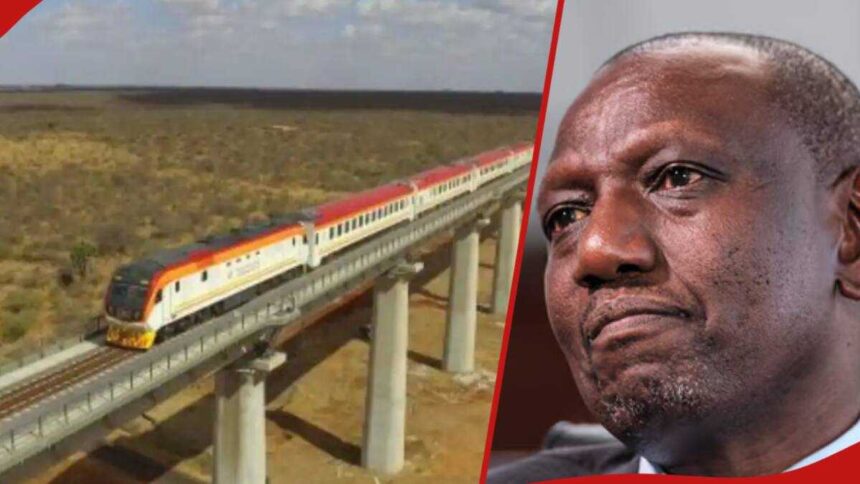
- President William Ruto’s administration announced plans to extend the Standard Gauge Railway from Suswa to Malaba
- Transport Cabinet Secretary Davis Chirchir said the country aims to finance the project without incurring additional debt
- The International Monetary Fund warned that Kenya was at significant risk of debt distress due to its growing debt and low revenue
TUKO.co.ke journalist Japhet Ruto has over eight years of experience in financial, business, and technology reporting, offering insights into Kenyan and global economic trends.
Kenya will, in March 2026, start the extension of the Standard Gauge Railway (SGR) project from Naivasha to Kisumu and then to Malaba without looking to China for new funding.

Source: Facebook
When Chinese funding ended in 2019, the project stalled, and the line remained unfinished.
The 369-kilometre railway line, which currently terminates just over halfway from Nairobi, highlights the challenges facing China’s Belt and Road Initiative (BRI) across Africa.

Search option is now available at TUKO! Feel free to search the content on topics/people you enjoy reading about in the top right corner 😉
How will Kenya finance the SGR extension?
Kenya intends to finance the project by securitising the railway levy to raise up to $4 billion (KSh 515 billion), Transport Cabinet Secretary (CS) Davis Chirchir revealed, as reported by Bloomberg.
“We are determined to finish the railway without accruing additional debt,” Chirchir assured taxpayers.
According to Business Insider Africa, this move represents Kenya’s attempt to become financially independent and manage the debt crisis.
How much will the first phase to Kisumu cost?
Kenya’s move to reject Chinese financing is indicative of changing conditions for underdeveloped countries that formerly depended on Beijing.
At home, China is also facing more challenges as a housing downturn and slower development put pressure on the country’s budget.
The last section of the railway, which will run from Suswa to the lakeside city of Kisumu, and then to Malaba, which is on the border with landlocked Uganda, would cost an extra $5 billion (KSh 643.6 billion).


Source: Facebook
According to budget records, the Treasury anticipates collecting KSh 41 billion from the 2% import tax in the year ending in June.
In the end, it will be the largest infrastructure project Kenya has undertaken since gaining independence from Britain in 1963.
Why did the IMF warn Kenya?
The IMF has warned that Kenya is at significant risk of a debt crisis due to its growing debt and low revenue.
China is the government’s biggest bilateral creditor, and Nairobi spends over $1 billion (KSh 129 billion) annually on debt servicing.
The levy-backed funding strategy comes after Gen Z protested tax hikes and economic hardship in 2024.
Last year, Kenya reduced the cost of debt servicing by $215 million (KSh 27.7 billion) annually by converting the railway’s dollar loans into yuan.
According to the Treasury, Kenya would only pay interest during a four-year grace period after the tenor of the Yuan loan was extended to 15 years, at interest rates of roughly 3%.

The railway levy was contractually designated as a backstop for servicing the original Chinese loans; thus, China has expressed worries about Kenya securitising it, according to Treasury Cabinet Secretary Joh Mbadi.
However, he insisted that President William Ruto’s administration will proceed with the plan.
Source: TUKO.co.ke