



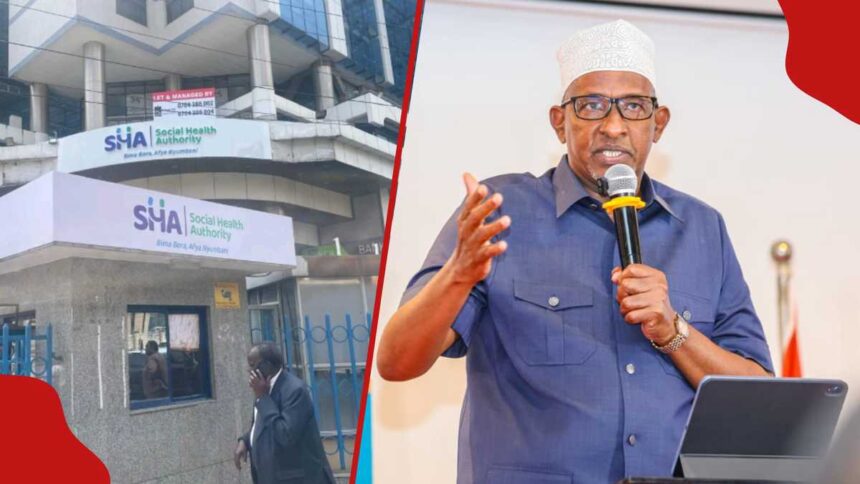
Editor’s note: In this piece, Maroa Robert Rioba, a clinician and advocate of the High Court of Kenya, examines various challenges Kenya’s health sector is facing. He notes that many hospitals have gone for months without reimbursement from the Social Health Authority (SHA). Rioba warns that if the issue is not addressed with the urgency it deserves, many private and faith-based organisations might shut down, leading to massive job losses and the collapse of the universal healthcare dream.
For months now, the lifeline of healthcare in Kenya has been slowly tightening into a noose.

Source: Twitter
Hospitals across the country have gone for over three months without reimbursement from the Social Health Authority (SHA)—despite providing services faithfully and continuously to millions of Kenyans.
What challenges are Kenyan hospitals facing?
Bills have piled up, salaries remain unpaid, pharmacies are running dry, ambulances are grounded, and medical staff are breaking under emotional, psychological, and financial strain.

Search option is now available at TUKO! Feel free to search the content on topics/people you enjoy reading about in the top right corner 😉
Yet in the midst of this national crisis, only a select few hospitals receive payments—a mysterious and painful act of selective funding.
How does one justify saving a few facilities while leaving the rest to suffocate? Are patients in some hospitals more deserving of life than others? What principle of justice or governance validates selective survival?
Meanwhile, claims by facilities continue to be rejected or returned on baseless technicalities, including claims for patients admitted beyond three days—the gravely ill, the critically injured, newborns fighting for breath, elderly patients with complications—the very patients who need care the most.
What kind of healthcare system punishes patients for being too sick? What kind of leadership demands services yet refuses payment?
The government’s official silence has been as cold as a stone. When RUPHA (Rural and Urban Private Hospitals Association) called for a national strike, demanding redress and survival, the government responded with indifference. The strike was ignored—completely, and deliberately.


Source: Twitter
It was as though the suffering of healthcare institutions and their workers meant nothing. And yet, in an extraordinary display of goodwill, most hospitals resumed services, hoping that humanity would prevail and dialogue would begin. That goodwill has been repaid with arrogance.
The government and SHA have developed an ego so towering that they no longer listen, no longer care, and no longer fear consequences. They seem convinced that no strike can shake them, no suffering can move them, and no voice can reach them.
But they are wrong.
Is the Kenyan health sector collapsing?
Across Kenya, facilities are shutting down, selling equipment, cutting services, and charging patients in desperate attempts to remain afloat—not out of greed, but out of survival.
Investors who once believed in the vision of Universal Health Coverage have lost faith. Who will invest in healthcare again after watching the system devour its own partners?

If this continues, we are headed for:
- Mass closure of private and faith-based hospitals
- Job losses on an unprecedented scale
- A paralysed referral chain
- Increased mortality for conditions that were once easily manageable
- A total collapse of the dream of universal healthcare
Universal health coverage cannot be built on broken backs and unpaid labour. You cannot demand sacrifice while offering starvation.
What is ailing Kenya’s health sector? The advocate’s stand
As an Advocate of the High Court, let it be said clearly: The government has breached lawful contracts and violated constitutional obligations.

Source: UGC
Hundreds of hospitals are preparing lawsuits seeking payment, damages, interest, and accountability. And when those suits flood Kenyan courts, the Judiciary must be ready to heal the nation where the Executive has failed.
If Parliament cannot act. If the Executive refuses to listen. The courts must defend the Constitution and protect the right to health.
Healthcare providers are not the enemies of the state. They believe in SHA. They want it to work. They have carried the burden with dignity, honour, and patience. They fought through COVID-19.

Read also
Man hoping to join police service heartbroken after failing eye-winking test: “Vitu ndogo”
They have fought through financial wounds. They have shown more compassion than the system that they serve. But they are bleeding.
You cannot starve hospitals and expect them to continue to save lives. You cannot ignore suffering and call it leadership. You cannot strangle healthcare and claim to strengthen it.
To the President, SHA leadership, and the conscience of this nation: Do not let hospitals die. Do not let patients pay with their lives. Do not bury the dream of universal healthcare.
Hospitals are not begging, they are demanding justice. They are demanding life. Resuscitate healthcare—before it flatlines.
The author is Dr Maroa Robert Rioba, a clinician and an advocate of the High Court of Kenya, principal – Maroa Rioba & Co. Advocates.
Views expressed here are the author’s and do not in any way represent the position of TUKO.co.ke.
Source: TUKO.co.ke