



- Kenya’s Cabinet approved the creation of a National Infrastructure Fund and a Sovereign Wealth Fund
- President William Ruto’s administration plans to accelerate privatisation of state assets to provide the seed capital for the new fund
- Kenya has multiple existing constitutional and statutory funds, such as the Consolidated Fund, Equalisation Fund, NG-CDF, among others
Elijah Ntongai, an editor at TUKO.co.ke, has over four years of financial, business, and technology research and reporting experience, providing insights into Kenyan, African, and global trends.
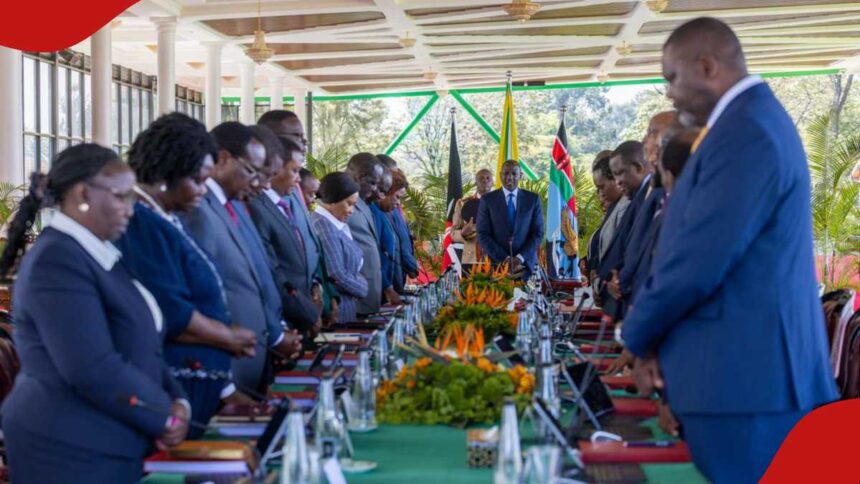
Kenya’s Cabinet approved the creation of two major new government funds central to President William Ruto’s ambitious plan to transform Kenya into a first-world economy.

Source: Twitter
In the last months of 2025, the president has been championing the establishment of a National Infrastructure Fund (NIF) and a Sovereign Wealth Fund.
The country has multiple existing funds, each with a distinct constitutional or legal mandate.
Search option is now available at TUKO! Feel free to search the content on topics/people you enjoy reading about in the top right corner 😉
How will the two new funds operate?

According to the Cabinet decision, the newly approved National Infrastructure Fund (NIF) will be established as a limited liability company to act as the central vehicle for financing priority public works, such as dams, highways, and railways.
However, this proposition has faced intense scrutiny and is subject to an ongoing legal process at the High Court. Critics have told the court that this will place the funds outside parliamentary oversight, which they termed as unconstitutional.
The Cabinet said the Sovereign Wealth Fund will ensure the prudent, long-term investment of revenues from natural resources and privatisations.
Notably, a key strategy to capitalise the NIF and the Sovereign Wealth Fund is an accelerated privatisation programme.
This includes the planned Initial Public Offering of the Kenya Pipeline Company by March 31, 2026, and the recently announced sale of a 15% government stake in Safaricom PLC, which have drawn significant opposition from political leaders and the public.
What are the existing key government funds in Kenya?
Kenya’s public finance is governed by Chapter 12 of the Constitution and the Public Finance Management (PFM) Act, which established specific funds for critical functions.

1. Consolidated Fund
This is Kenya’s main public account, established under Article 206 of the Constitution.
All national revenue is paid into the Consolidated Fund, and it finances government operations (both recurrent and development expenditure).
No money can be spent from it except under an Appropriation Act passed by Parliament (with a few exceptions such as debt service, pensions and salaries of constitutional officers). Therefore, Parliament approves the budget each year, and the National Treasury draws down from the Consolidated Fund accordingly.
2. Contingencies Fund
This is a reserve for urgent or unforeseen expenditures, established under Article 208.
In an emergency or disaster, the Treasury Cabinet Secretary may draw advances from the Contingencies Fund (subject to strict criteria and regulatory guidelines) to meet urgent needs for which no prior budget exists.
In effect, the Contingencies Fund allows the government to respond quickly to crises such as natural disasters, civil emergencies, etc., before parliamentary approval can be obtained.

3. Equalisation Fund
The Equalization Fund was established by Kenya’s 2010 Constitution as a dedicated mechanism designed to redress historical marginalisation and bridge the unequal development gap between regions.
Its mandate, as stipulated in the Constitution, is exclusively to finance essential basic services, specifically water, roads, health facilities, and electricity, in marginalised areas.
Annually, the fund is allocated 0.5% of all revenue collected by the national government and withdrawals from the Equalisation Fund are strictly limited to projects in qualifying counties as defined by law.
4. Judiciary Fund
This fund was established to ensure the financial independence of the courts under Article 173 of the constitution.
The Judiciary Fund is charged directly to the Consolidated Fund each year, meaning its budget is automatically provided for in law and cannot be varied by the executive.
In practice this means the National Treasury deposits the courts’ approved budget in the fund so the Judiciary can operate judicial administration processes such as court services, salaries of judges and magistrates, judicial training, etc. without interference.

National statutory and sector funds
Apart from the four constitutional funds, the Kenyan government has established other statutory funds for various functions.
1. National Government Constituencies Development Fund (NG-CDF)
This fund was established by statute (originally under Article 204(6) and CDF Acts) to support local constituency development. This fund has been controversial and has been previously declared unconstitutional by the courts.
Each constituency receives a share of national revenue from the funds share of 2.5% of all ordinary revenue to finance projects on education, health, water and local infrastructure at the constituency level.
The fund is managed by a Constituency Fund Committee in each constituency and governed by the NG-CDF Act.
2. National Peace Support Operations Fund
The National Peace Support Operations Fund (NPSOF) is an initiative established under the Public Finance Management Act.
It is designed to sustainably finance Kenya’s participation in international peacekeeping (PSO) missions, ensuring troops have modern equipment, proper training, and timely payment.

The then Cabinet Secretary for Defence Aden Duale launched the Fund at the Kahawa Garrison, in 2024, moving beyond the standard budget to secure resources from UN reimbursements and government allocation for national security and international obligations.
3. Affirmative Action/Empowerment Funds
These include the Youth Enterprise Development Fund (YEDF) and Women Enterprise Fund (WEF), both established by Acts of Parliament to empower youth and women respectively.
Each is a government fund (and state corporation) that provides loans, grants and training to its target group. For example, YEDF (formerly Youth Fund) makes small, low-interest loans to youth-owned enterprises, while WEF does similarly for women entrepreneurs
These funds receive annual budget allocations from the Treasury, which are charged to the Consolidated Fund.
Kenya also has a Persons with Disabilities Fund under the NGAAF, but in practice youth and women funds are the main active empowerment funds.
4. Uwezo Fund
This is a statutory fund designed to support start-ups and village-level projects for young people, women and people with disability to boost enterprise.
Like YEDF and WEF, Uwezo Fund is a state corporation funded by annual Treasury allocations. Its grants must comply with conditions and are drawn from budgeted votes

5. Higher Education Loans Board (HELB)
This is a state corporation and fund providing loans and bursaries for Kenyan students.
As a government-backed fund, HELB is administered by its Board under the HELB Act. It is funded from loan repayments and government subventions (annual budget allocations).
HELB then disburses loans/bursaries to eligible students and repayments are channeled back into the fund for future students
6. National Social Security Fund (NSSF)
This is Kenya’s statutory pension fund for private- and non-political public-sector employees.
All employers and employees contribute to NSSF under law. The NSSF fund is managed by its Board (under the NSSF Act).
Contributions are remitted into the fund, which invests them and pays out retirement benefits.
7. Social Health Insurance Fund (SHIF)
This fund was established under President William Ruto, under the Social Health Insurance Act, 2023, to replace NHIF.
SHIF collects earmarked revenues such as health insurance contributions and deductions from incomes and pays for health services according to government policy.

8. Financial Inclusion Fund
This fund, popularly known as the Hustler Fund, was established under the Financial Inclusion Fund (FIF) Act to provide affordable credit, savings, and insurance to underserved Kenyans, particularly those in the informal economy.
This is a government-led loan programme that was launched by President William Ruto in November 2022 to fulfill a key campaign promise of creating a “new economic order.”
It was expecetd to counter the burden of high-interest digital loans, by providing instant, accessible credit to Kenyan citizens through four loan types: personal finance, micro, SME, and start-up loans, with individuals able to borrow at an annual interest rate of 8%.
The fund is backed by an annual budget allocations of roughly KSh 50 billion (about $409 million), which is planned for at least five years.
Apart from the above, the constitution has also established other funds at the county level such as the County Revenue Funds and the County Emergency Funds.
Source: TUKO.co.ke