



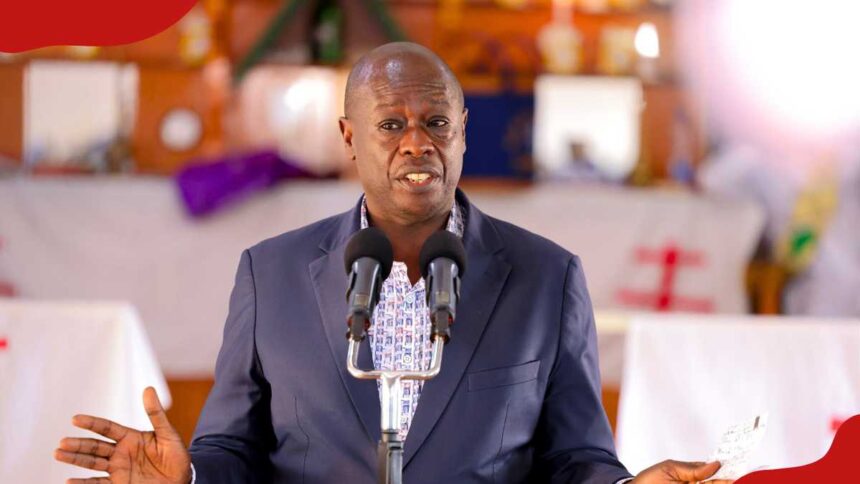
- Supreme Court dismisses motions from Rigathi Gachagua and the National Assembly, clearing the way for the main appeal
- The dispute revolves around the deputy chief justice’s empanelment of the High Court bench and related documents
- Court confirms it will only review bench empanelment legality, leaving impeachment merits for the High Court
Search option is now available at TUKO! Feel free to search the content on topics/people you enjoy reading about in the top right corner 😉
TUKO.co.ke journalist Harry Ivan Mboto has over three years of experience reporting on politics and current affairs in Kenya
The Supreme Court has dismissed consolidated applications linked to former deputy president Rigathi Gachagua’s impeachment, allowing the main appeal on the legality of the High Court bench to proceed.

Source: Facebook
Both Gachagua and the National Assembly had filed motions, which the apex court rejected without orders as to costs.
The legal dispute stems from October 2024, when the National Assembly impeached Gachagua, prompting multiple High Court petitions challenging aspects of the parliamentary process.
Chief Justice Martha Koome initially empanelled a three-judge bench to hear the first set of petitions.

Later, as additional petitions emerged, including attempts to block Senate proceedings and the swearing-in of Kithure Kindiki as deputy president, Deputy Chief Justice Philomena Mwilu constituted the same bench in the Chief Justice’s absence.
Why did Gachagua challenge deputy chief justice?
Gachagua challenged the deputy chief justice’s authority and sought recusal of the judges, alleging bias.
The High Court dismissed these claims, ruling that empanelment is an administrative duty the deputy chief Justice may exercise when the chief justice is unavailable, and found no grounds for recusal.
The Court of Appeal later reversed the High Court on the empanelment issue, affirming that only the chief justice has the power to constitute benches, except in exceptional circumstances, while upholding the decision against recusal.
Following these rulings, the National Assembly filed an appeal to the Supreme Court, with Gachagua submitting a cross-appeal.
Before the substantive hearing, Gachagua sought to stay High Court proceedings, strike out the National Assembly’s appeal, and remove certain documents from the record, while the National Assembly also applied to strike out his cross-appeal.
What did Supreme Court rule on Gachagua’s applications?

In a ruling by a five-judge bench led by Chief Justice Koome, the Supreme Court dismissed both applications.
The court said it could not stay High Court proceedings, affirmed that the National Assembly’s appeal raised substantive issues deserving full hearing, and ruled that the documents Gachagua wanted expunged, such as correspondence and empanelment directions issued by the deputy chief Justice on October 18, 2024, were central to the dispute and had been relied upon by the High Court and Court of Appeal.
The Supreme Court further clarified that Gachagua’s cross-appeal did not meet the threshold for summary dismissal, and the National Assembly could not strike it out since the issues raised, including judicial bias and recusal handling, fall within the court’s constitutional jurisdiction and relate to the right to a fair hearing under Article 50 of the constitution.
The court emphasised that its review would focus solely on the legality of the bench’s empanelment, not on the merits of Gachagua’s impeachment, which remain pending in the High Court.


Source: Facebook
Did Mutuse regret impeaching Gachagua?
TUKO.co.ke previously reported that more than a year after Gachagua was removed from office, Kibwezi West MP Mwengi Mutuse said he remained proud of sponsoring the impeachment motion.
Mutuse tabled the impeachment motion in the National Assembly on October 1, 2024, citing alleged constitutional violations, divisive public conduct, failure to discharge duties as deputy president and questionable accumulation of wealth.
The motion received overwhelming backing from MPs, leading to Gachagua’s removal and subsequent consideration of the matter by the Senate.
Looking back, Mutuse said he had no regrets and argued that events after the impeachment had validated his actions.
He claimed the former deputy president continued to engage in ethnic-based politics, insisting that such conduct proved Gachagua was unfit for public office.
Source: TUKO.co.ke