



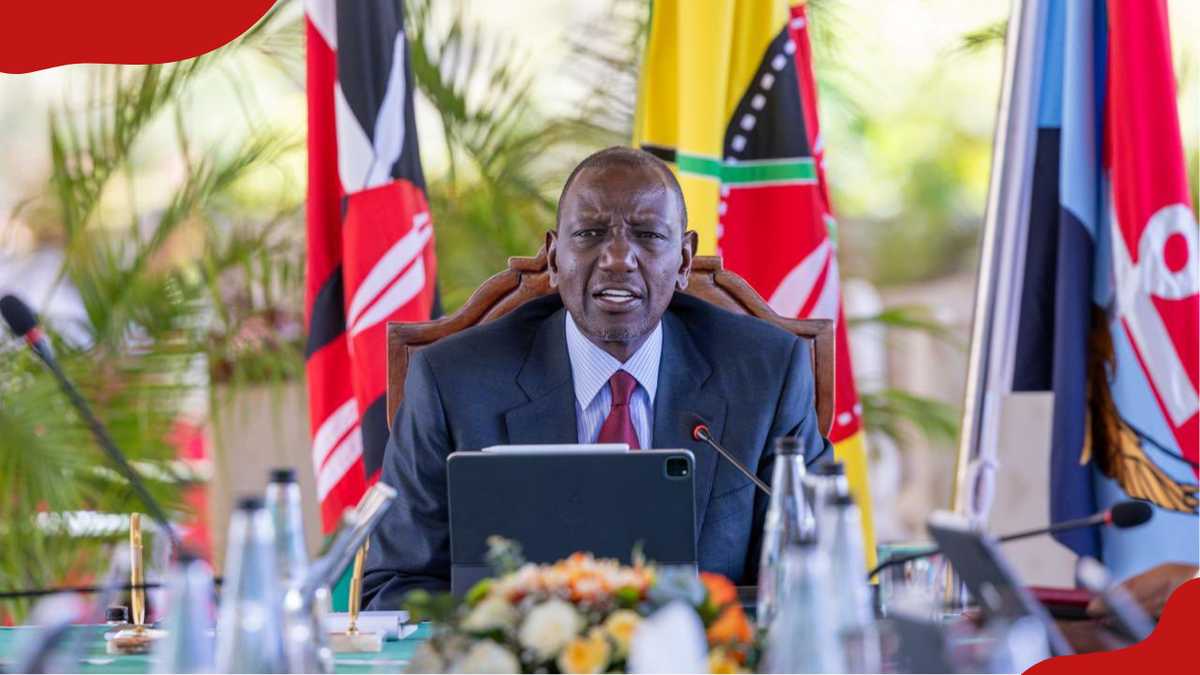
- President William Ruto has ordered the installation of smart traffic cameras in major towns within 30 days
- The system will be linked to an instant fines framework aimed at reducing corruption and improving road safety
- The reform plan includes reducing roadside officers, scrapping non-essential roadblocks, and digitising fine payments
TUKO.co.ke journalist Harry Ivan Mboto has over three years of experience reporting on politics and current affairs in Kenya
Kenya’s roads could soon undergo a major transformation as the government moves to replace traditional traffic enforcement with smart surveillance technology.

Source: Twitter
President William Ruto directed the National Transport and Safety Authority (NTSA) and the Ministry of Transport to install smart traffic surveillance cameras in major urban centres within the next 30 days.
The new system is expected to support the enforcement of instant traffic fines and reduce reliance on physical road checks.
The directive was issued during a meeting of the National Council on the Administration of Justice held at State House, Nairobi, on Monday, March 2.

During the session, the president openly questioned why the instant fines programme had taken so long to implement, expressing frustration over delays in deploying modern enforcement technology.
He instructed Transport Cabinet Secretary Davis Chirchir and NTSA Director General Nashon Kondiwa to fast-track the rollout, stating that the technology should be operational in at least five or six major towns within a month.
How can digital enforcement reduce traffic corruption?
The cameras are expected to integrate directly with the digital fines system to ensure seamless enforcement.
Chirchir signalled that the rollout would proceed under an investor-supported model, allowing for quicker deployment without placing immediate financial strain on the government.
Beyond enforcement efficiency, the president linked the reform to integrity concerns within the traffic department.
Recent findings from the Ethics and Anti-Corruption Commission (EACC) revealed deeply rooted corruption in traffic operations, including claims of structured bribery networks and daily revenue targets imposed on officers.
An audit of the National Police Service (NPS) indicated that although the service has more than 100,000 officers, about 1,000 traffic police officers are deployed on active road duty at any given time.

Investigators estimated that individual officers could collect huge amounts in bribes within hours, leading to billions of shillings in illicit payments each month nationwide.
Will Kenya reduce traffic officers stationed on roads?
To address this, Ruto directed that the number of traffic officers stationed on roads be reduced once the camera system becomes operational.
He argued that digital enforcement would limit human interaction, lower corruption opportunities, and improve compliance.
The broader reform package includes removing non-essential roadblocks along major highways, deploying up to 500 high-definition cameras in cities such as Nairobi, Mombasa, Kisumu, and Nakuru, and integrating NTSA’s digital platform with mobile money services to simplify fine payments.
The initiative is being implemented in collaboration with the National Council on the Administration of Justice, chaired by Chief Justice Martha Koome, and Inspector General of Police Douglas Kanja.
While stressing on the importance of road safety, the president also pointed out that an efficient fines system could contribute to government revenue collection.
He urged the responsible agencies to treat the project as a priority and ensure that the one-month deadline is met.

Source: TUKO.co.ke


